A Night Flight South, a Generous Plate of Satay Rice, and an Unexpected Cockpit Visit
For travellers based in mainland China who refuse to default to the obvious routing, a Hong Kong connection on Cathay Pacific offers a compelling alternative. This report covers the second leg of a Nanjing–Hong Kong–Kuala Lumpur journey, taken in late April before the tropical heat of the Malaysian summer fully sets in. The writer’s philosophy — avoid China Eastern where possible — led to this five-star alliance detour, and the night flight south proved largely worth it.
Hong Kong: The Sky Bridge Detour
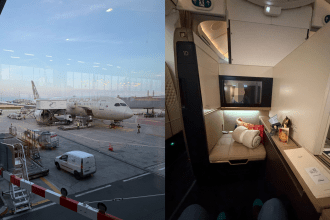
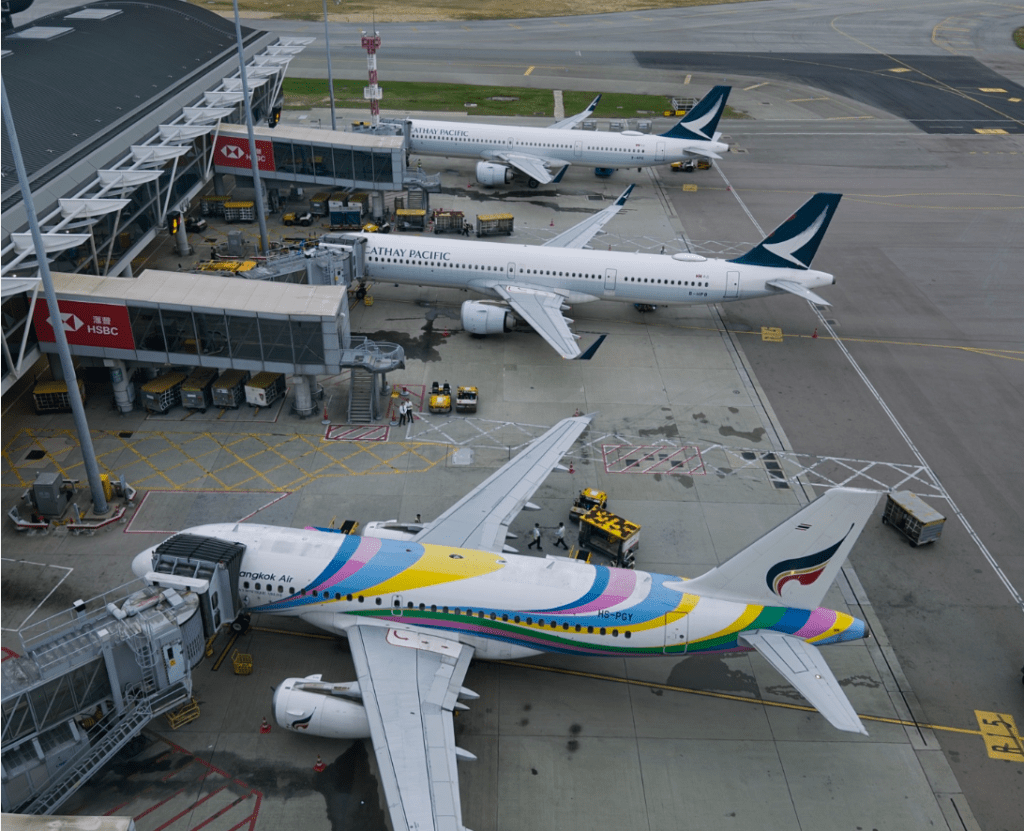
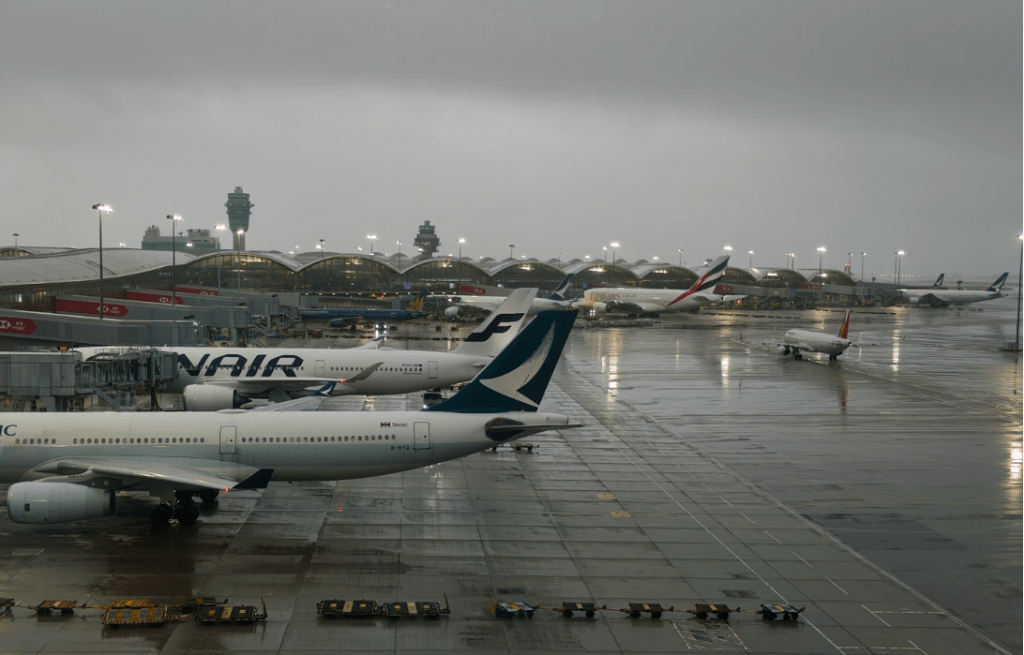
After half a day exploring Kowloon, the journey resumed at Hong Kong International. Cathay’s A321neo fleet operates almost exclusively from the satellite concourse, accessed via the iconic Sky Bridge connection. For any aviation enthusiast transiting Hong Kong, the Sky Bridge is reason enough to allow extra time — the views over the apron from the elevated walkway are among the best of any airport in the world, and a phone camera was apparently sufficient to capture a four-way frame of a Cathay 777-300ER, an Emirates A380, an Etihad 777-300ER, and a British Airways A350-900 parked side by side. That kind of ramp density is what makes HKG what it is.
The day’s aircraft, registration B-HPH, had arrived on a prior service from Fukuoka and was visible from the walkway before boarding began.
The Seat: First Row Economy, Blessed Legroom
Flight CX733, operated by an Airbus A321-251N. Seats 22J and 22K — the first row of economy on the right side, chosen deliberately. Cathay’s A321neo inherits the interior from the old Dragonair configuration, with a 31-inch seat pitch in economy.
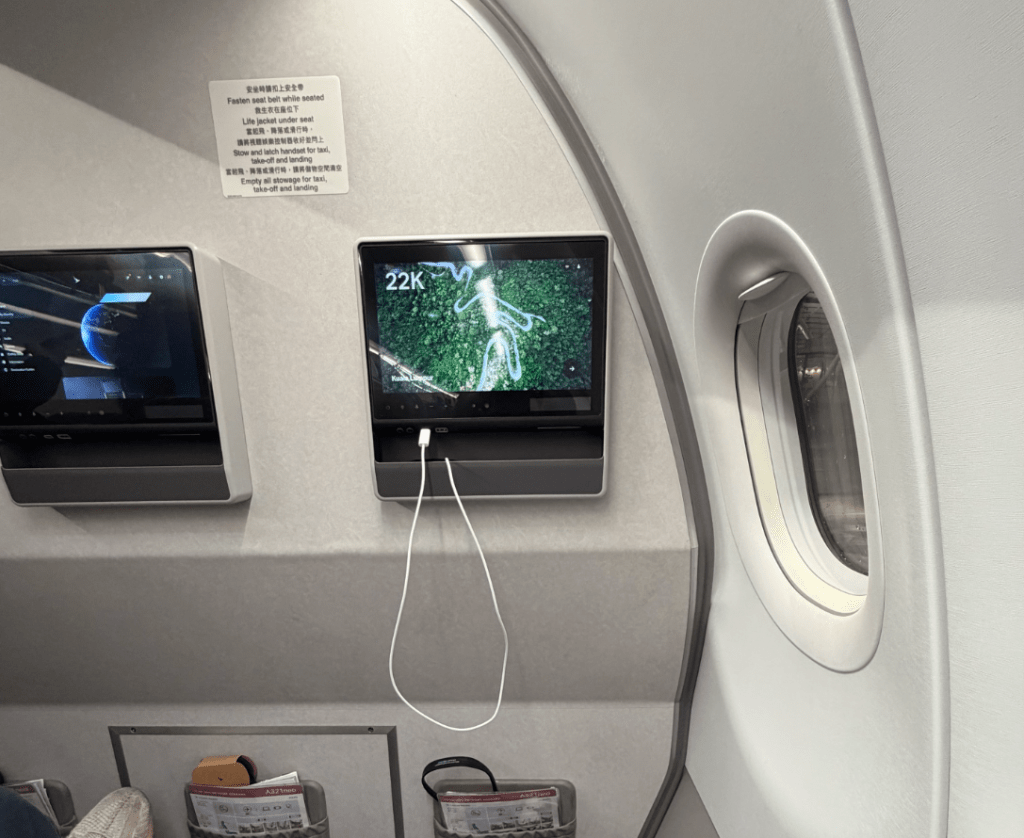
On paper that is unremarkable; in practice, the notably thick seatback design means the effective knee room is tighter than the number suggests, and the general passenger consensus is that it can feel reminiscent of a low-cost carrier. The writer notes this plainly.
Row 22, however, is a different story. With the galley bulkhead ahead, legroom was effectively unlimited — legs fully extended, any position comfortable. Slippers and socks were delivered by cabin crew shortly after boarding, and both a pillow and blanket were already waiting at the seat. For an economy class night flight, this was a reasonable setup.
Departure and Dinner
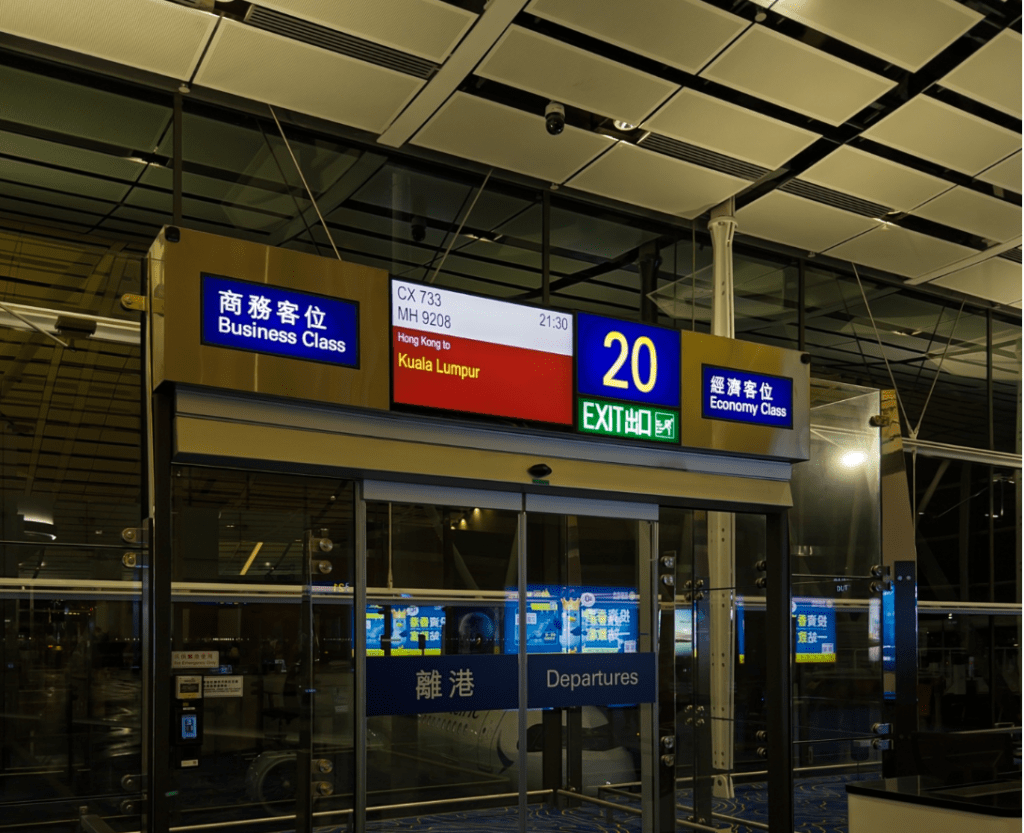
CX733 departed Hong Kong’s runway 25L at 21:52, running 22 minutes late. The takeoff was later identified as a flex thrust departure — a detail the aviation-minded writer noted with appreciation.
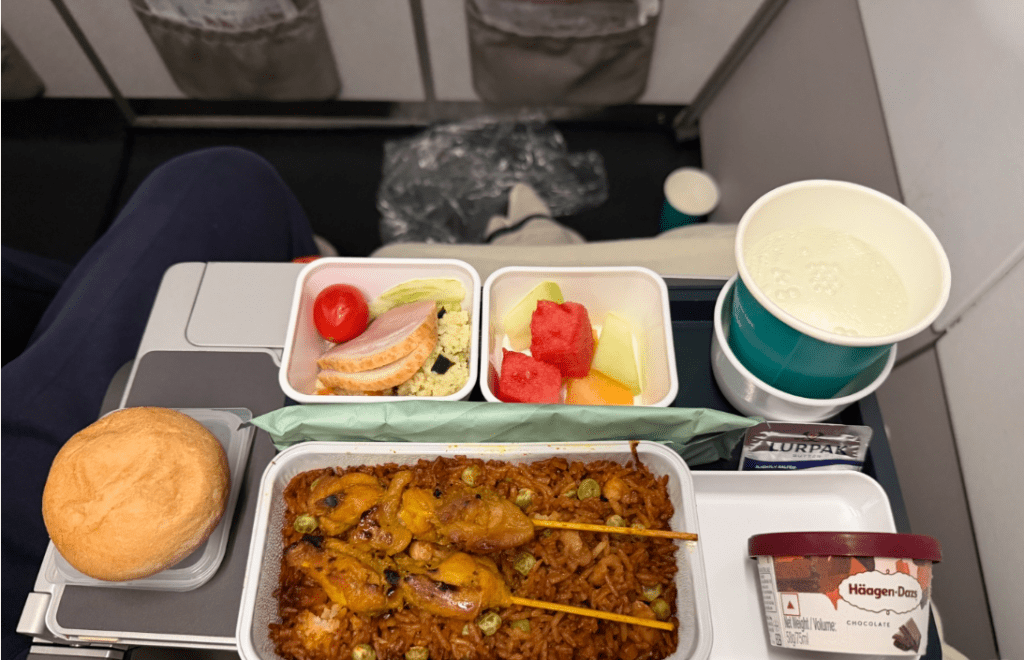
Dinner service followed quickly after levelling off. Two options were on offer: fish or chicken. The chicken turned out to be satay chicken skewers on fried rice — a choice the writer suggests the crew ought to mention proactively, given that it reads as a generic “chicken option” on the menu but arrives as a distinctly Southeast Asian preparation with a fair amount of heat. The complaint is mild and fair.
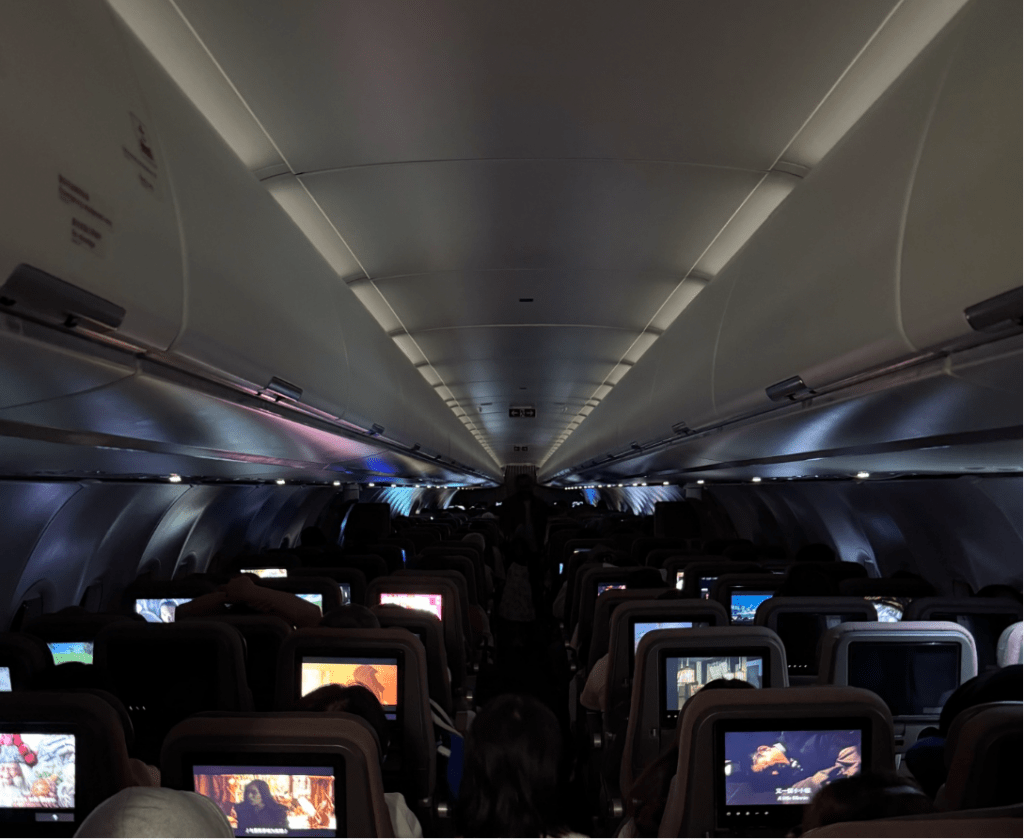
What was not mild was the portion size. The rice was described as piled generously thick — among the largest economy class meal portions the reviewer has encountered. Accompanying items included a chicken salad, bread, a Häagen-Dazs ice cream, and fruit. For economy, this is a strong showing.
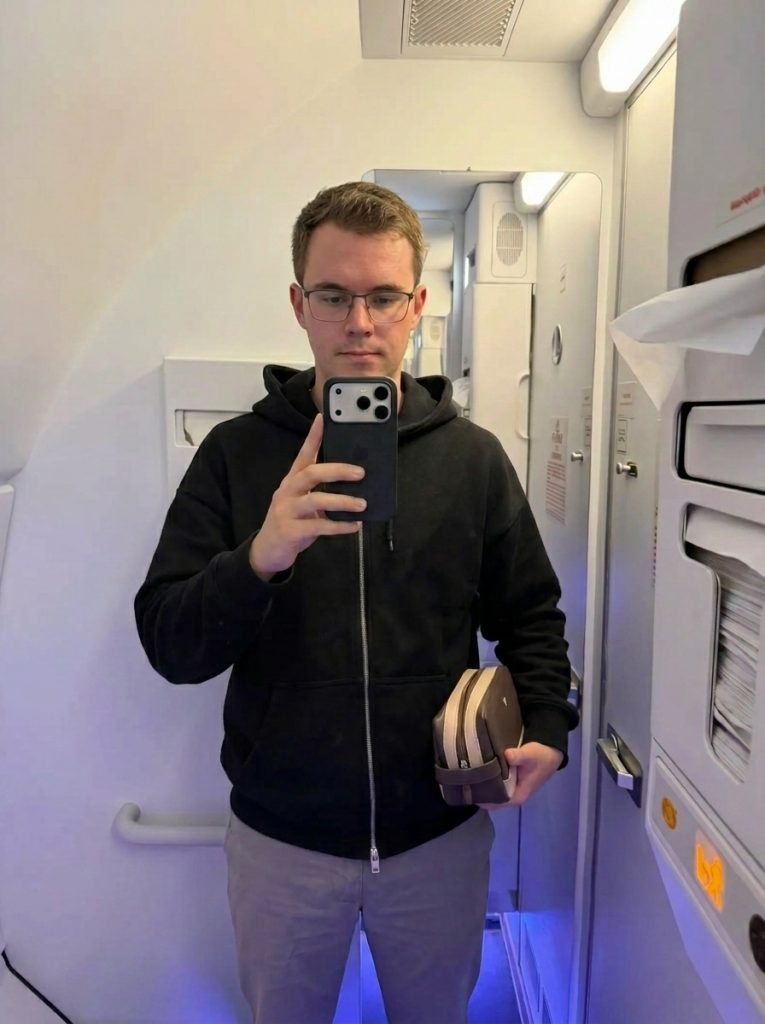
The lavatory was standard and unremarkable. Notably, no toothbrush or toothpaste was provided — possibly a calculation that the short flight time makes pre-sleep grooming unnecessary. The cabin was essentially full, making aisle access during service a bit of a logistical puzzle for anyone in a middle or window seat.
Entertainment: Panasonic Screens and an Eason Chen Concert
Cathay’s A321neo is fitted with Panasonic HD seatback screens, with a content library that refreshes monthly. The contrast with some mainland Chinese carriers — reportedly offering as few as three Chinese films and one English title on intercontinental routes — is noted with dry humour.
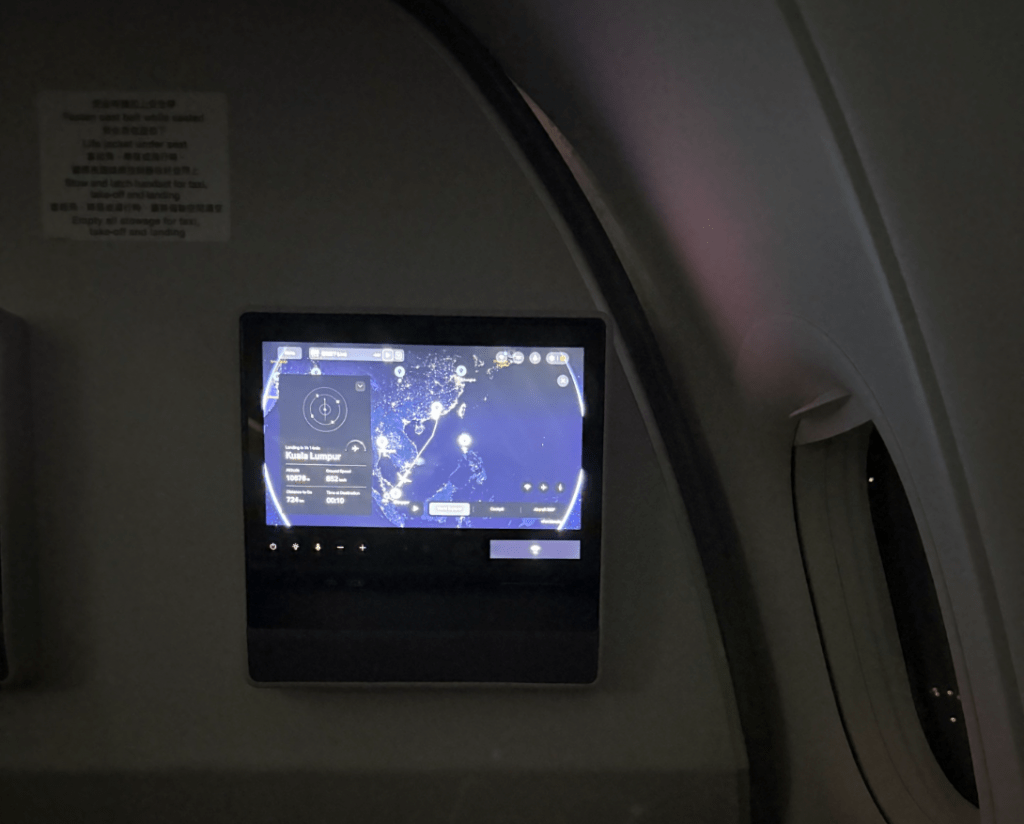
The writer spent much of the flight watching Eason Chan’s Fear and Dreams concert. The observation that the concert’s setlist and artistic execution reward repeated viewing is the kind of personal aside that makes these reports enjoyable to read.
Arrival: Early Landing, Cockpit Visit, and an Unwelcome Bus Ride
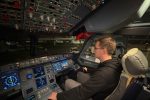
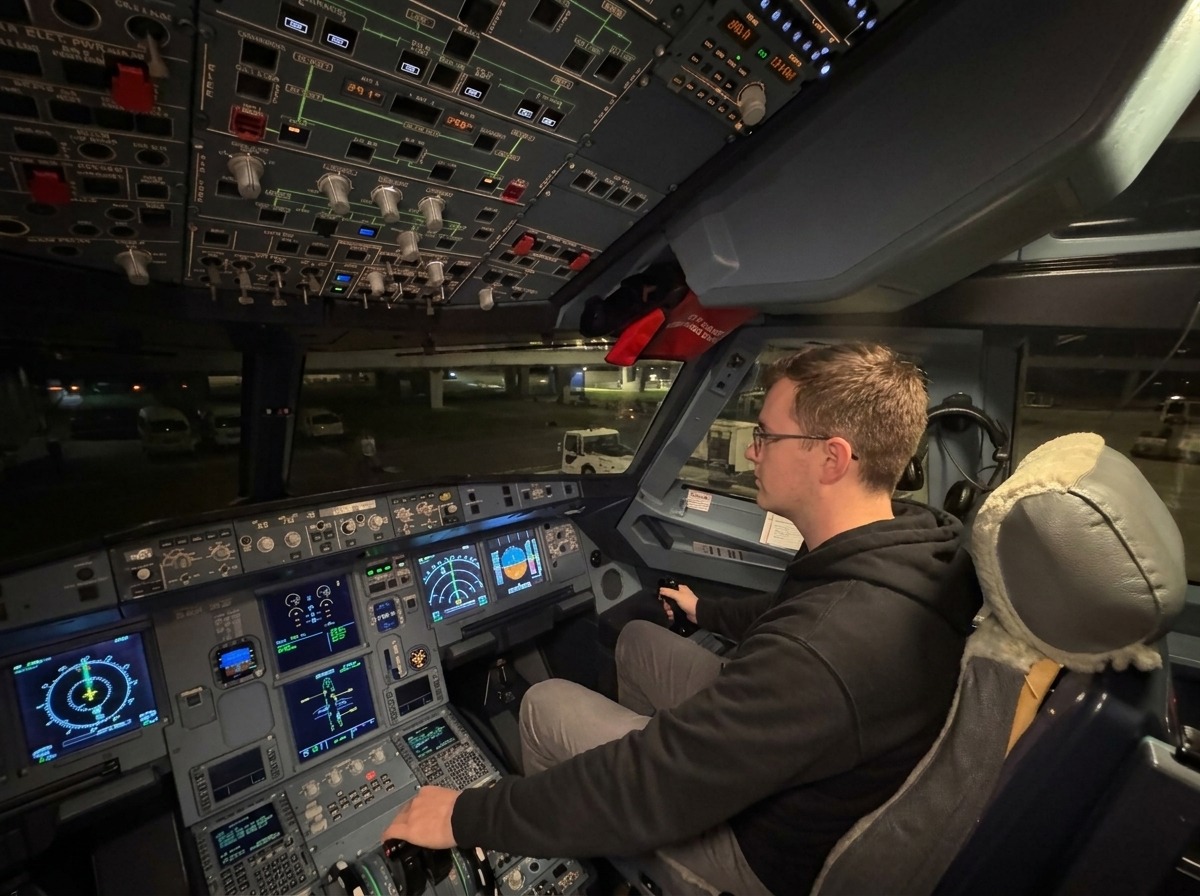
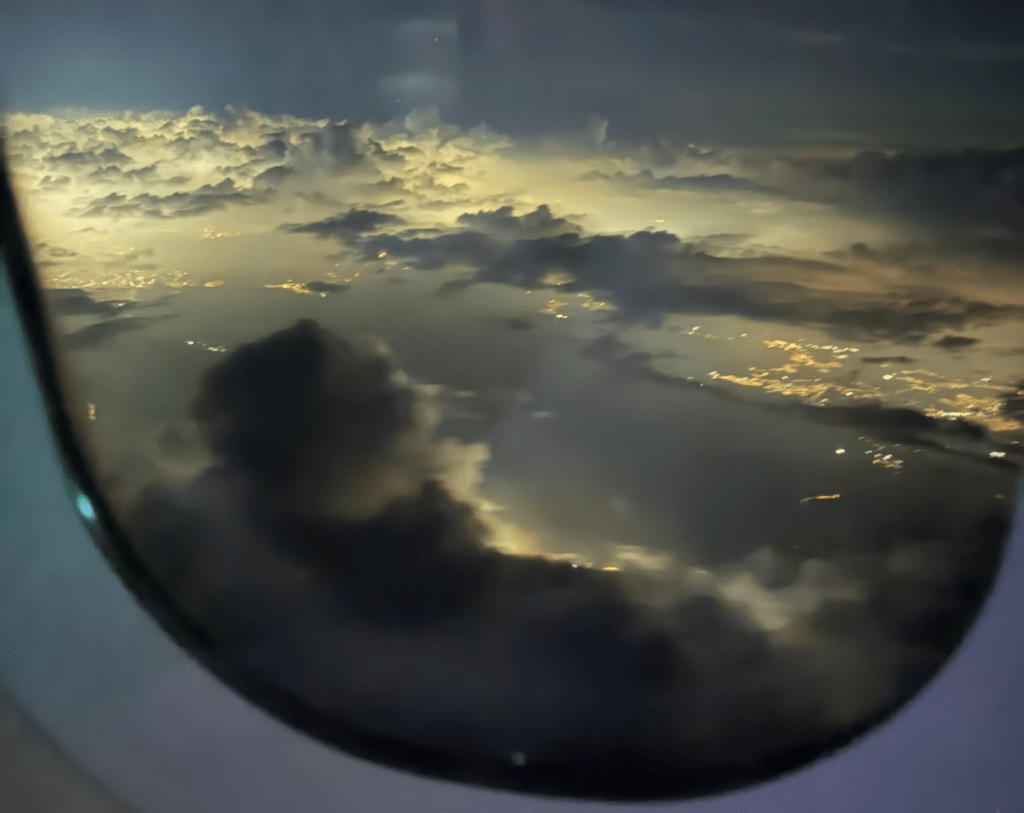
CX733 touched down on runway 32L in Kuala Lumpur at 01:15, fifteen minutes ahead of schedule. What followed was unexpected: despite the late hour and a long inbound sector, the captain invited the writer into the flight deck. The conversation covered flight simulation — the reviewer flies X-Plane 12 — and the captain offered some pointers, though the writer modestly suggests the advice may have been wasted on their current skill level. A hands-on experience with the A321neo’s sidestick and throttle followed, described as feeling broadly similar to simulation hardware.
The coda to an otherwise smooth arrival was less pleasant. Kuala Lumpur’s Terminal 1 satellite shuttle train does not run after midnight, meaning all arriving passengers had to take a bus from the satellite pier to the main terminal. The writer notes this was more frustrating than simply being assigned a remote stand from the start — the expectation of a train, followed by the reality of a bus, is worse than no expectation at all.
A friend on the same trip asked why a direct flight from Nanjing was not taken instead; the writer’s unspoken response was that five hours on a narrow-body economy seat with a blade-thin pitch would have answered the question for itself.
Final Thoughts
Cathay Pacific’s A321neo economy product delivers where it counts on a short haul night flight: generous meal portions, good screens, attentive service, and slippers at your seat. The tight effective legroom in standard rows is the product’s one real weakness, and one that Cathay has publicly acknowledged — an announced increase in seat pitch across the A321neo fleet should make a good product meaningfully better. For travellers willing to route through Hong Kong, the experience remains comfortably above the regional average.