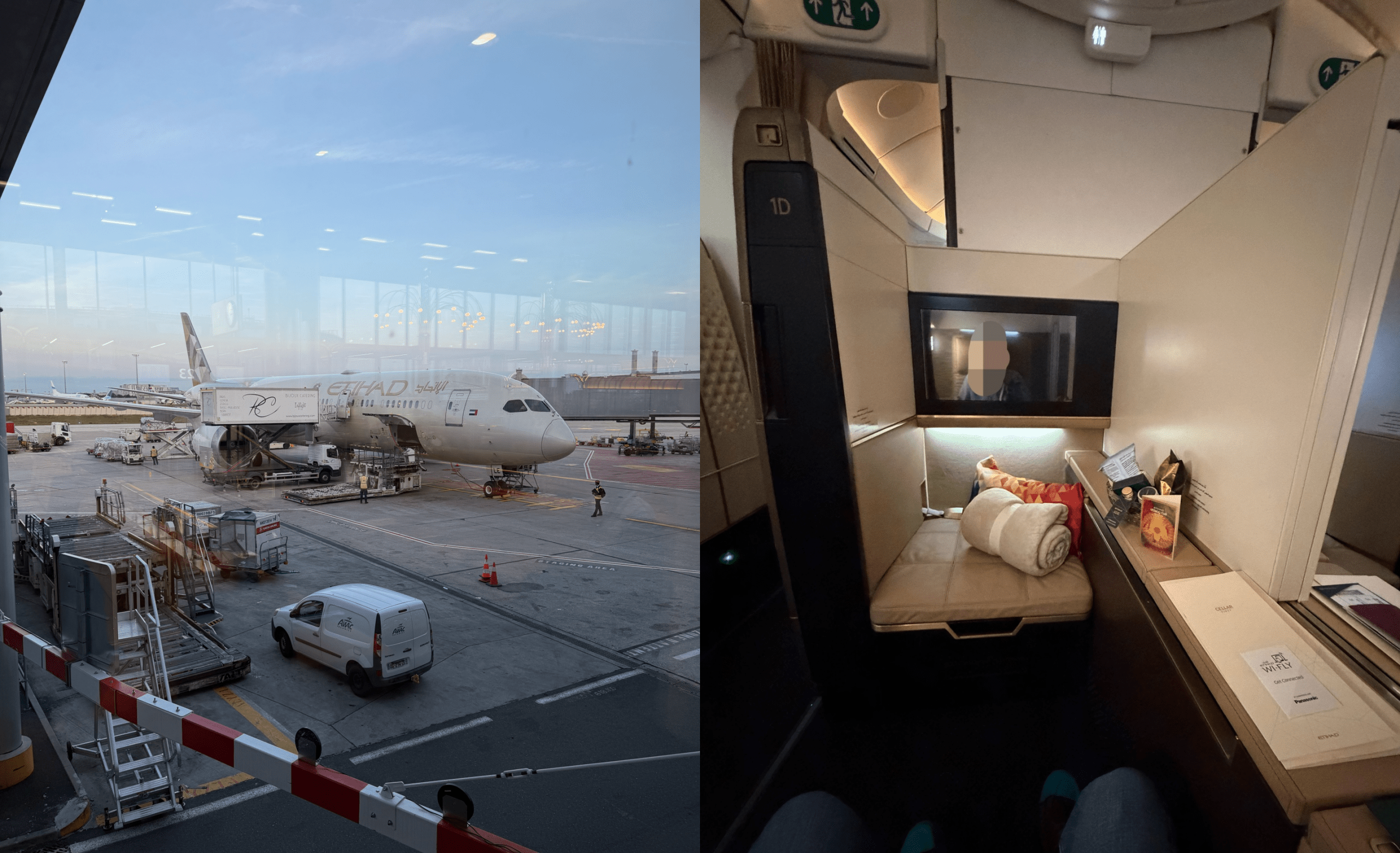
A Tale of Two Aircraft and the Unexpected Downgrade That Still Delivered
Few things sting quite like a last-minute aircraft swap on a premium cabin booking. This journey from Paris Charles de Gaulle to Phuket via Abu Dhabi was originally planned around Etihad’s flagship A380 first class — with ambitions of experiencing the legendary Residence suite — but shifting demand linked to the Middle East situation led to a swap to an Airbus A350-1000.
Since that aircraft carries no first class, the itinerary was rerouted to an evening Boeing 787-9 service instead. The result was still a compelling first class experience, just not the one originally booked.
Paris CDG: A Dedicated First Class Entry Point
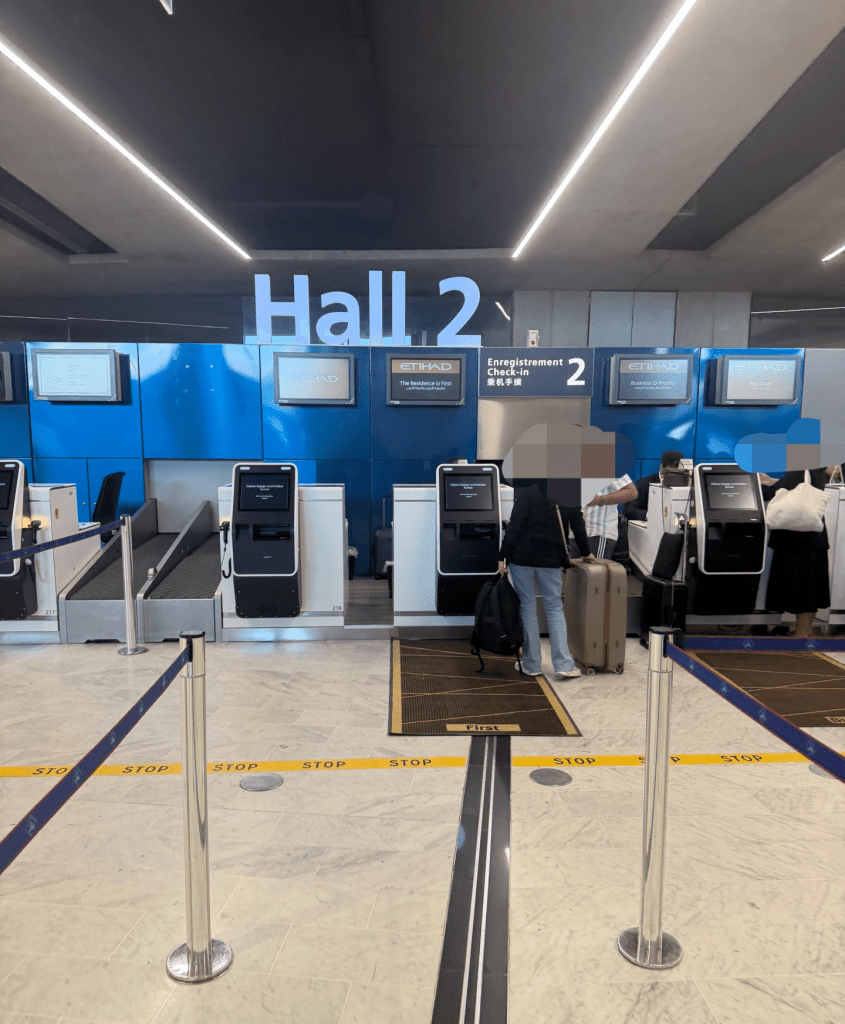
Etihad operates out of Terminal 1 at Charles de Gaulle, one of the airport’s older facilities. Despite the vintage surroundings, the check-in experience for premium passengers is well-organised. Dedicated counters serve Sky Residence and first class guests separately from business and economy, and the branded carpet leading to the premium desks sets an immediate tone.
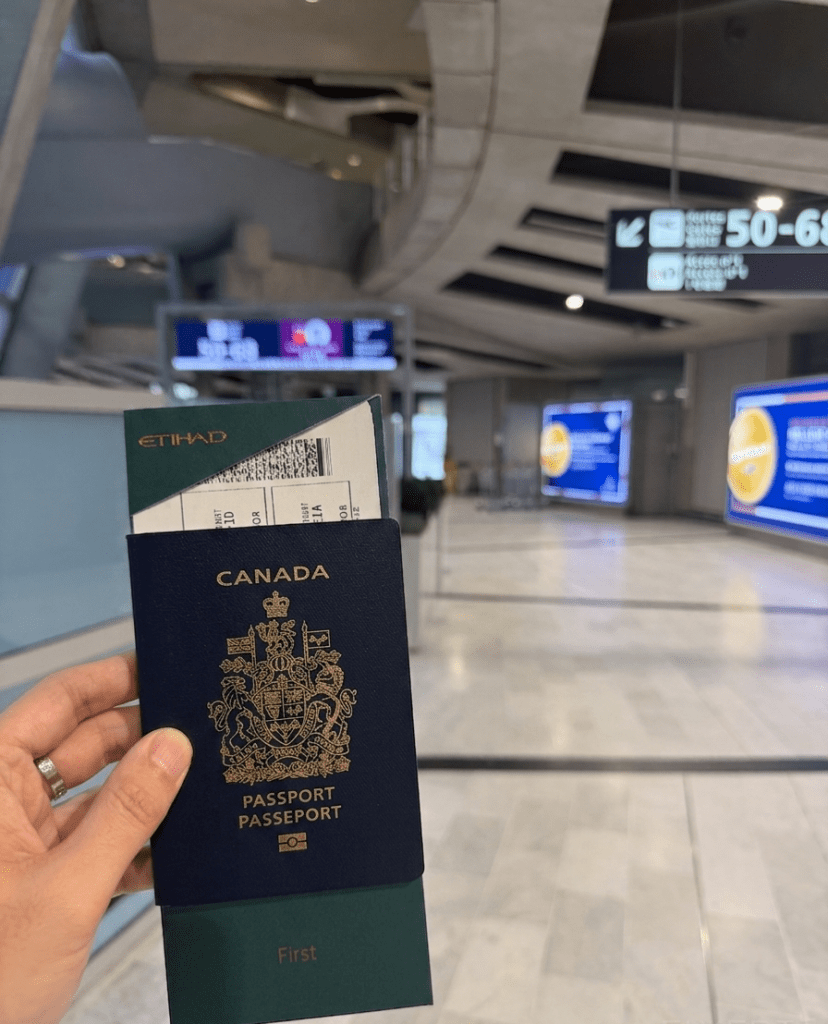
There is something to be said for the small ritual of presenting a boarding pass in a sleeve — it is a deliberate, unhurried moment that signals you are in different territory.
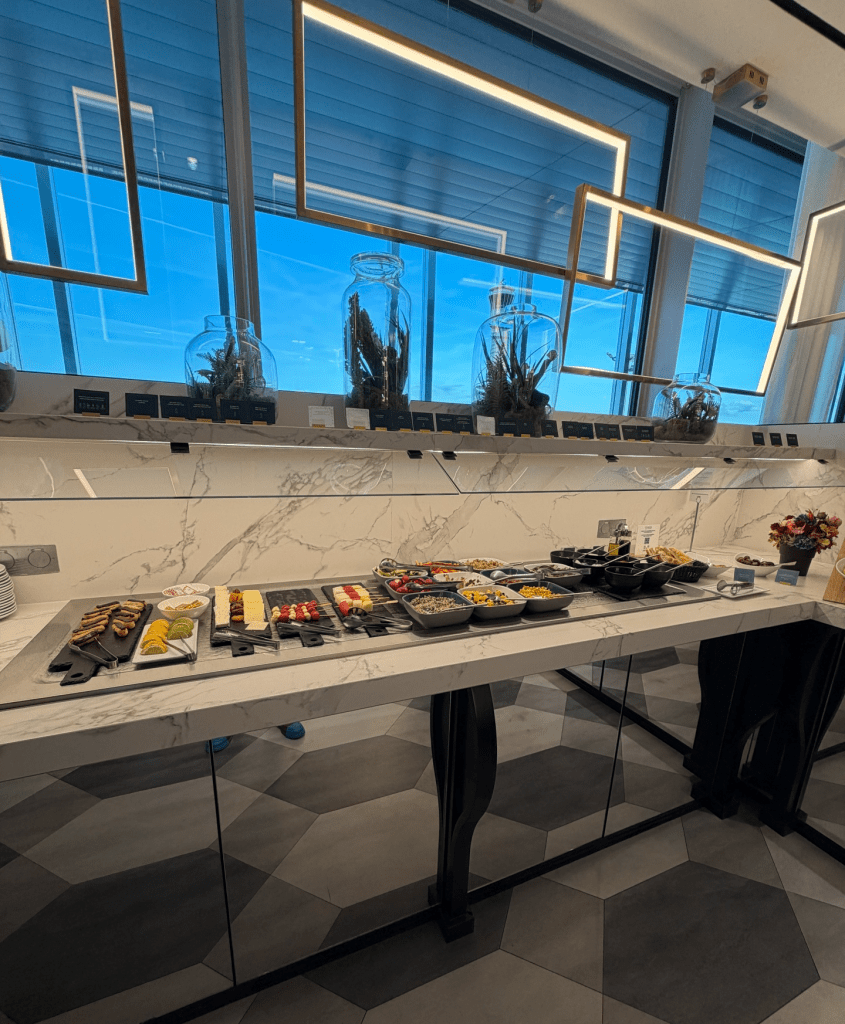
The lounge assigned to Etihad passengers at CDG is the airport’s Extime facility. While not an Etihad-owned space, the airline has arranged a private VIP room within it for first class and Sky Residence travellers, stocked with drinks and light bites, separate from the main lounge area.
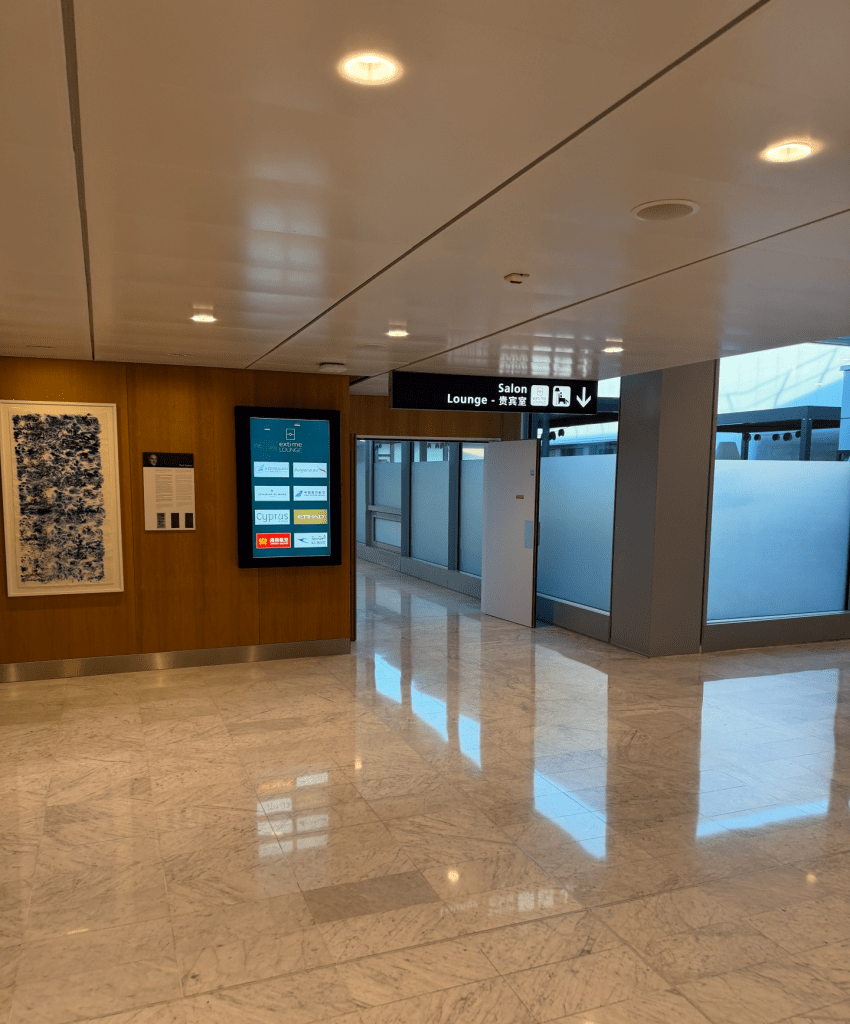
The main lounge is solid enough on its own, but having that separated enclave for the highest tier adds a meaningful layer of exclusivity.
On Board the 787-9: First Class From Paris
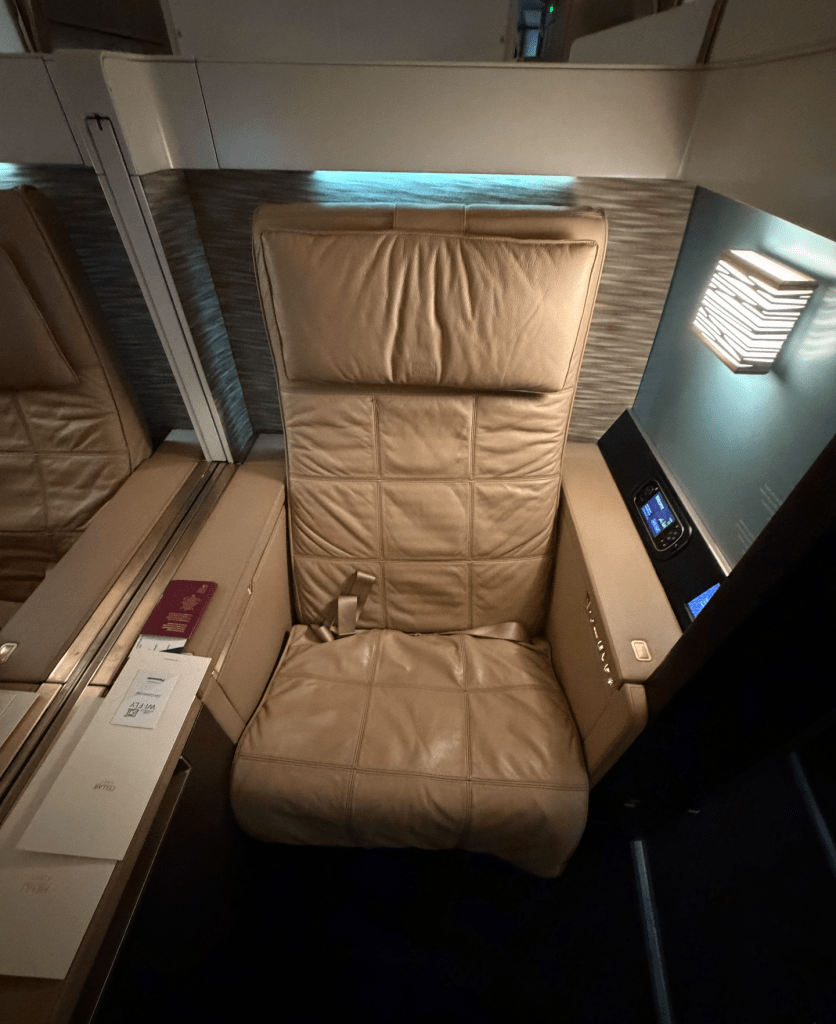
Seat 1D was a forward-facing configuration — Etihad’s 787 first class staggers orientation by row, with window seats in the first row facing backward and the middle seat facing forward, reversing in the second row. The suite is a private, enclosed space, and the attention to small details makes itself known immediately upon boarding.
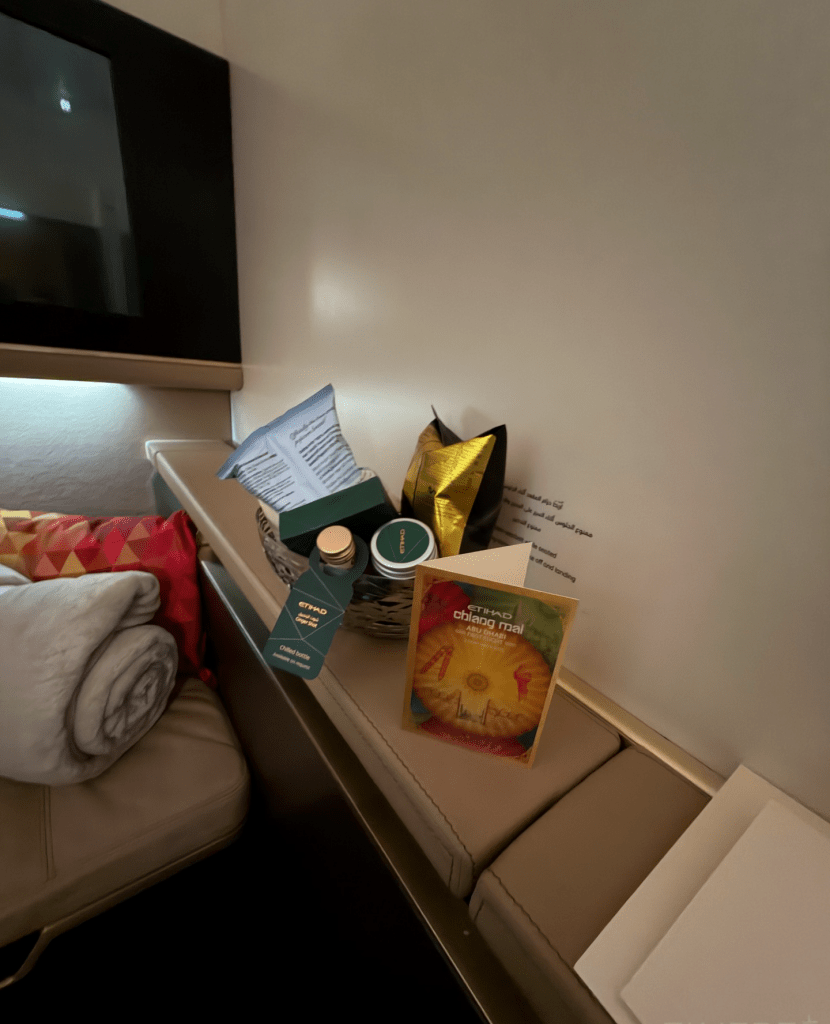
A basket of snacks and a handwritten welcome card from the cabin manager — the cover printed with a map of Etihad’s route network — were waiting at the seat. These are precisely the kind of touches that separate genuine hospitality from procedural service.
Amenities included a full pyjama and slipper set produced in collaboration with Giorgio Armani, Arabic decorative lanterns as ambient lighting, noise-cancelling headphones, a well-stocked mini bar beside the seat, and a toiletry kit containing items available on request beyond the standard set. Free Wi-Fi was provided via a printed card.
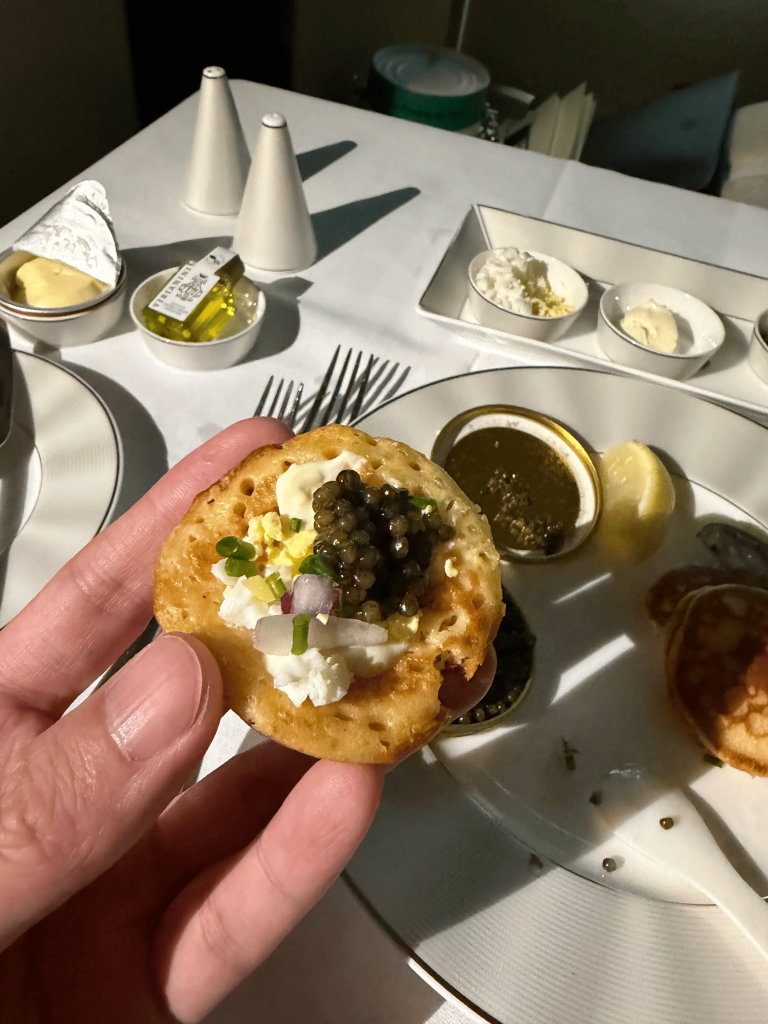
The dining experience leaned into Etihad’s Gulf identity. A multi-course meal began with pre-departure drinks and a snack basket, progressing through caviar — notably sourced from Iran — an Arabic mezze starter, soup, a palate-cleansing sorbet, and a main course of Arabic-spiced lamb.
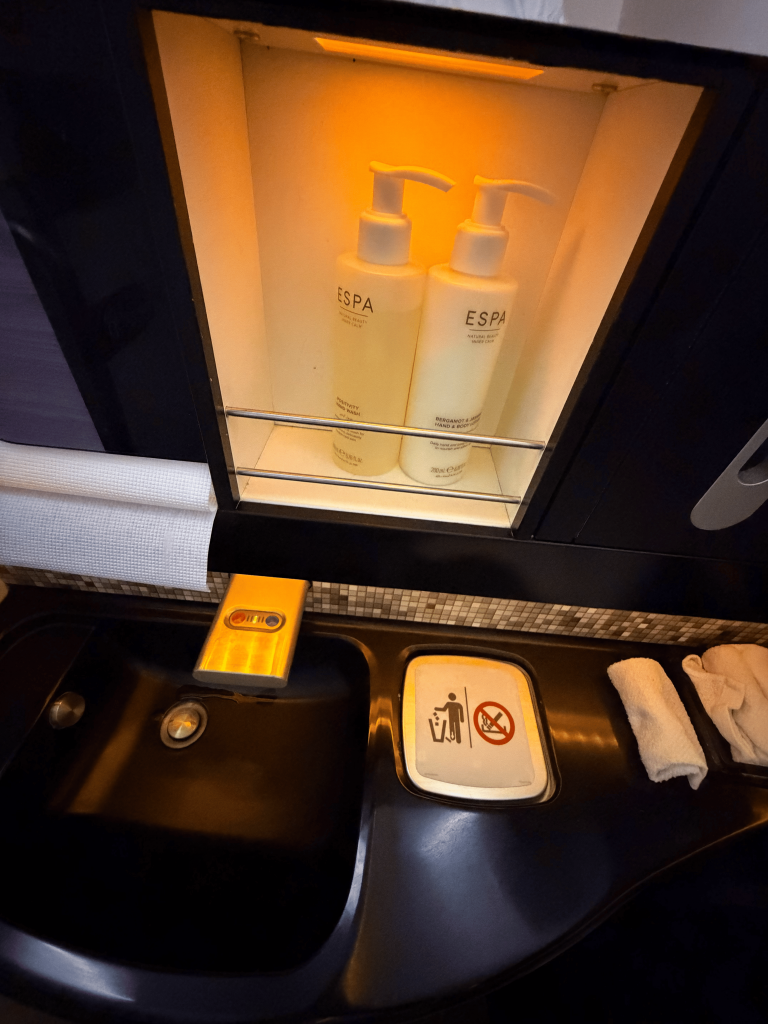
The beverage list was extensive, covering cocktails and a strong selection of non-alcoholic options including mocktails, which is a welcome acknowledgment that not all passengers drink. The seat’s massage function was noted as genuinely effective, and the lavatory was spacious and well-appointed.
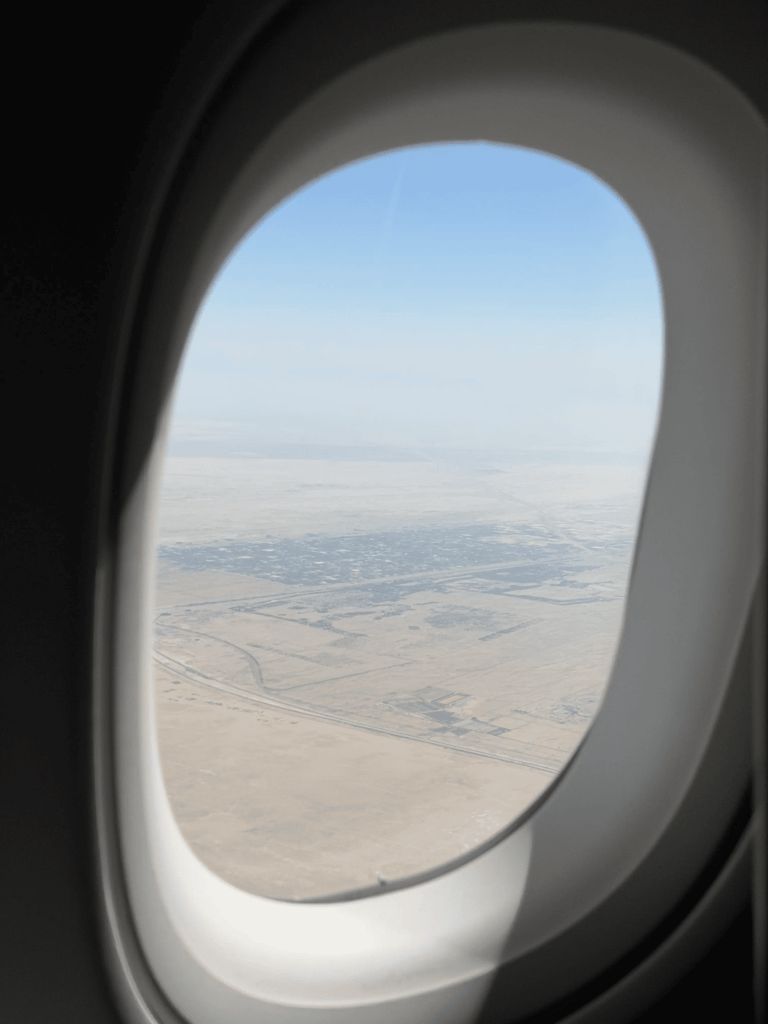
A small gift upon descent rounded things off: a decorative Arabic coffee cup printed with Etihad’s destination cities.
Abu Dhabi Layover: The Home Lounge Advantage
Transiting through Etihad’s home hub means access to the airline’s own first class lounge, which operates at a level noticeably above what third-party airport lounges can offer. First class passengers receive a complimentary 15-minute massage, with a choice of four different techniques — an unusual and genuinely appreciated inclusion that makes a layover feel less like dead time.
Abu Dhabi to Phuket: First Class on a Narrowbody
The second leg, from Abu Dhabi to Phuket, was operated by one of Etihad’s newest Airbus A320s. On this configuration, the two bulkhead seats in row one are designated as first class. The honest assessment is that the hardware sits closer to an enhanced business class than a traditional first class suite — there are no closing doors, no flat bed, and the privacy is limited. The reviewer describes it as a “reinforced business class,” which is fair.
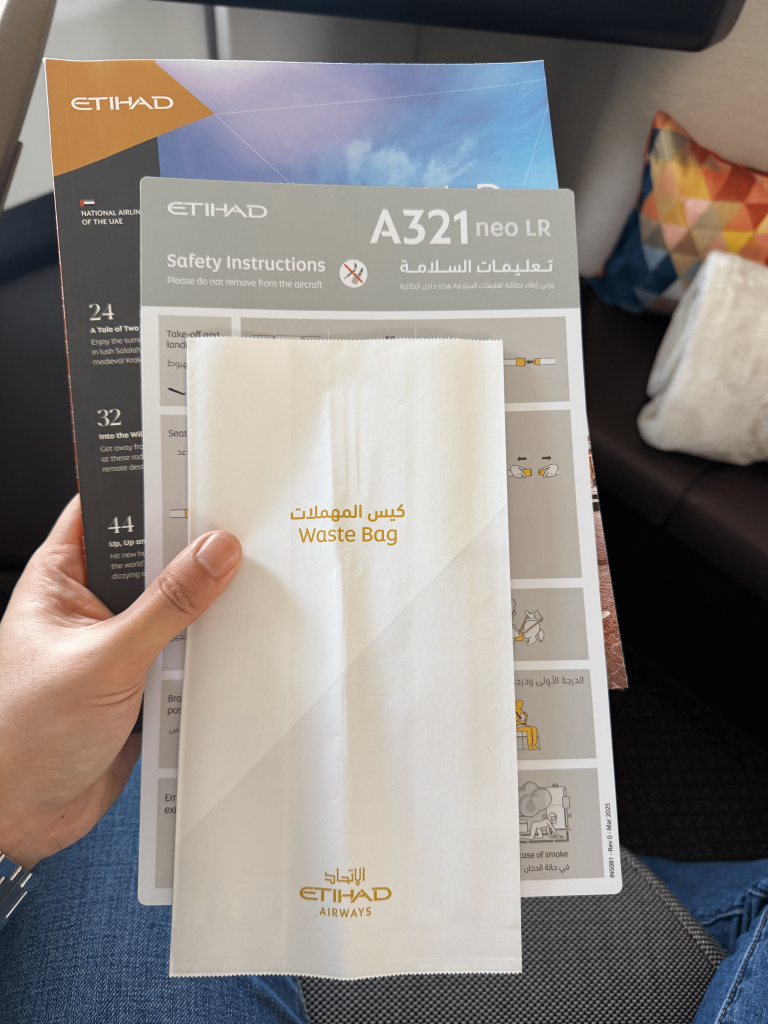
That said, Etihad made the service count. Arabic coffee arrived shortly after boarding, the menu was presented formally, and caviar returned as a starter — this time with restaurant-grade plating that drew a specific mention.
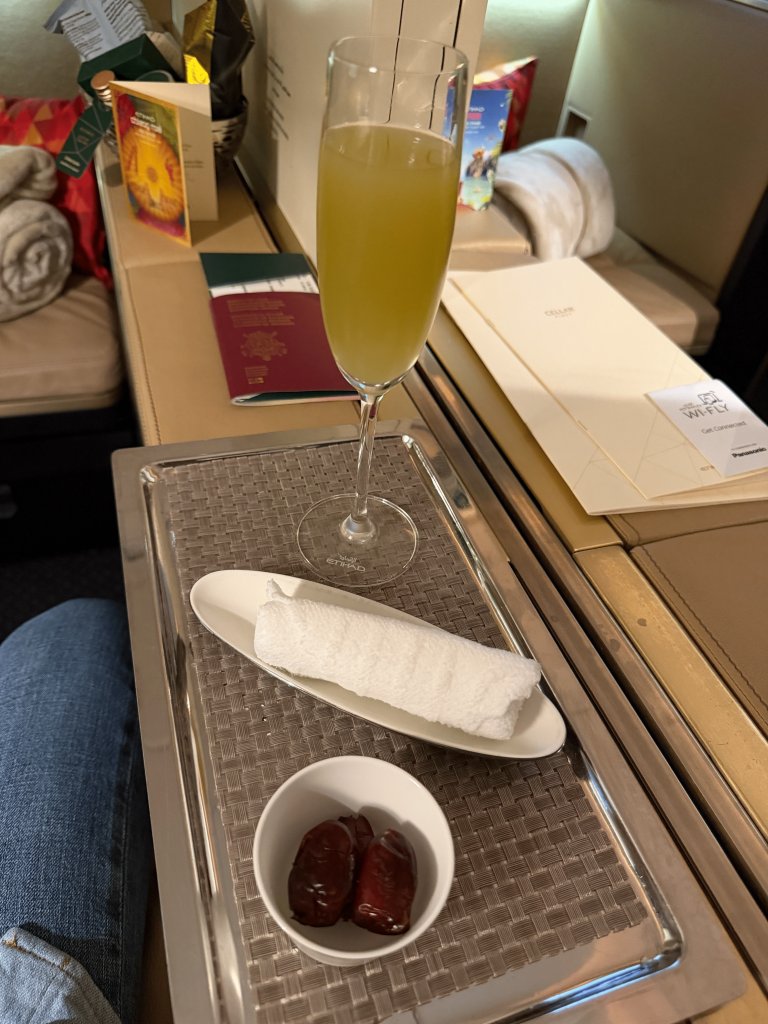
Fresh bread, a well-curated pre-meal drink, pre-landing fruit and dessert, and first class-branded still water all featured. The bed was made up for rest on this overnight-ish sector, and with the suite door closed — even on this more modest aircraft — there was a real sense of separation from the cabin behind.
Final Assessment
This itinerary was not what it was supposed to be. The A380 first class product, particularly the Residence, represents a genuine pinnacle of commercial aviation, and missing that was a real loss.
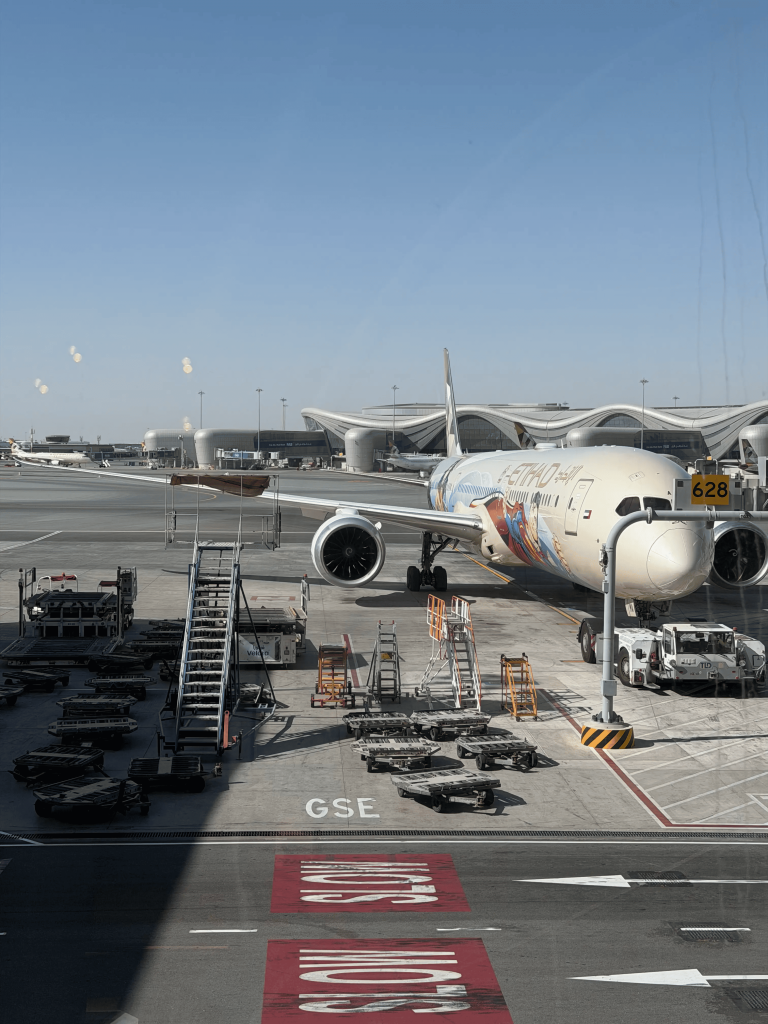
But what Etihad delivered on the 787-9 and even the A320 was still a cohesive, high-quality experience built around genuine hospitality, strong food and beverage, and the kind of personal service touches — the welcome card, the Armani pyjamas, the departure gift, the massage at Abu Dhabi — that justify the first class price point even when the hardware falls short of the flagship.
For anyone with Etihad first class on the bucket list, the 787-9 is a worthy starting point while waiting for that elusive A380 opportunity.