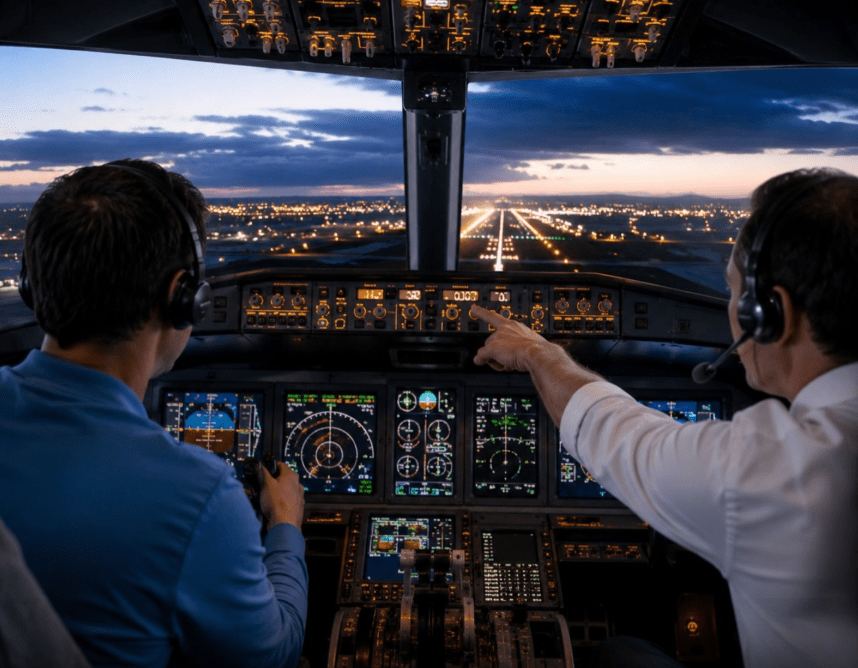
A shocking survey reveals 32% of Americans believe they could land a passenger jet with ATC help. Aviation experts break down the reality behind the “Hollywood fantasy” — from the Cessna miracle to why a Boeing 737 is a completely different beast.
The “I Could Do That” Epidemic: What the Numbers Actually Say
Let’s be real — we’ve all thought it during a long-haul flight. Staring out at the clouds, half-watching the wing flex, that little voice creeps in: “If something happened to the pilots… I bet I could figure it out.”
You’re not alone. A recent survey of over 20,000 U.S. adults found that nearly one-third — 32% — believe they could safely land a passenger aircraft if air traffic control talked them through it.
Here’s where it gets even more interesting: almost half of all men surveyed said they were confident they could pull it off. Women? Not so much. (We’ll leave the gender confidence gap discussion for another article.)
But here’s the thing — aviation professionals aren’t laughing. They’re concerned. Because the gap between public confidence and cockpit reality isn’t just wide; it’s practically an ocean.
The Miracle That Fueled a Million Daydreams: Darren Harrison’s Real-Life Landing
“My Pilot Has Gone Incoherent. I Have No Idea How to Fly the Airplane.”
If you’ve heard this story before, it’s because it genuinely belongs in a movie. On May 10, 2022, Darren Harrison was just another passenger on a Cessna 208 Caravan flying from the Bahamas to Florida. Then the pilot, Ken Allen, slumped over the controls. The plane went into a nosedive.
Harrison, who had zero flight experience, didn’t panic. He climbed over three rows of seats, pulled the unconscious pilot off the yoke, and somehow leveled the aircraft at 9,000 feet while barefoot. His radio call to Fort Pierce Tower has since become legendary among aviation circles:
“I’ve got a serious situation here. My pilot has gone incoherent. I have no idea how to fly the airplane.”
What happened next was a masterclass in calm under pressure. Air traffic controller Robert Morgan — a part-time flight instructor with 1,200 hours — was pulled from his break. Using a printed photo of the Cessna cockpit he’d never flown, Morgan talked Harrison through the entire approach.
The landing? Not textbook, but survivable. Harrison even had to ask the question every novice wonders: “How do I turn this thing off?”
Allen survived a life-threatening aortic dissection thanks to emergency surgery. Seventeen months later, the FAA cleared him to fly again. Harrison went home to his pregnant wife. And a nation of armchair pilots thought: “See? Told you it was possible.”
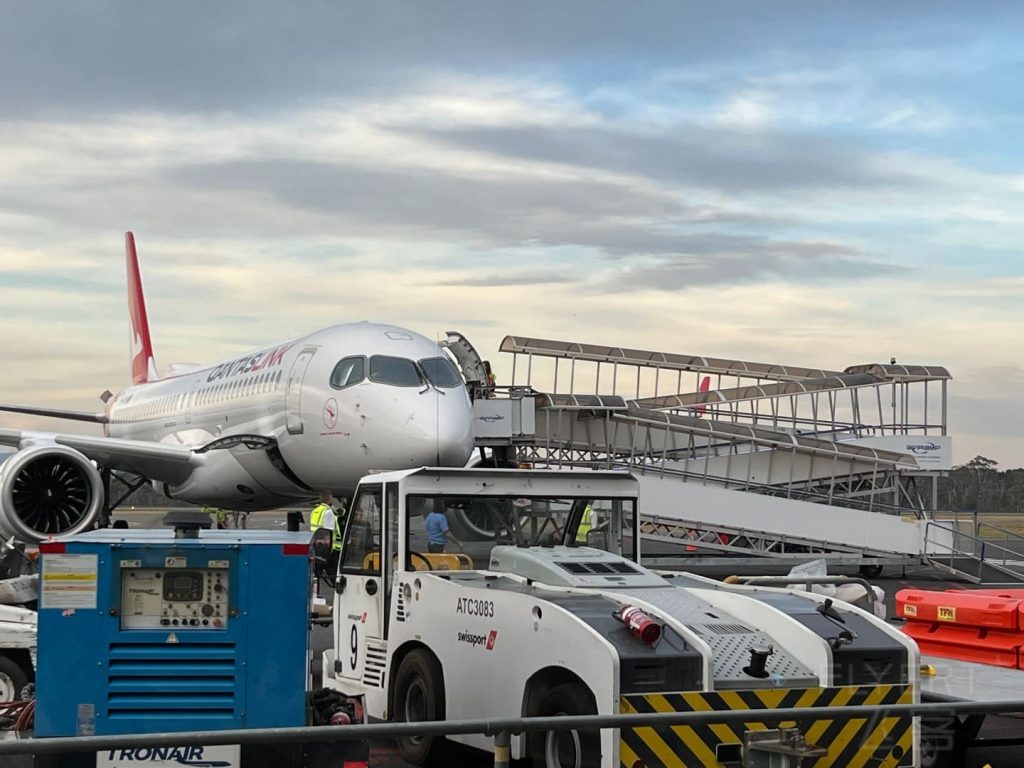
Why Your Cessna Daydream Crashes Against a Boeing 737 Reality
The “Bicycle to Formula 1” Problem
Here’s where I have to be the bearer of bad news as someone who’s spent years in this industry.
Landing a Cessna Caravan with ATC guidance is possible. Landing a Boeing 737 or Airbus A320 as a passenger with zero training? Statistically near-impossible.
One seasoned aviation specialist put it perfectly: the jump from a small single-engine prop to a commercial airliner is like going “from a bicycle to a Formula 1 car.”
Let me break down why:
| Factor | Cessna 208 (Harrison’s Plane) | Boeing 737 / Airbus A320 |
|---|---|---|
| Cockpit Complexity | Basic analog + limited digital | 50+ buttons, switches, displays |
| Landing Speed | ~70-80 knots | ~130-150 knots |
| Systems Management | Throttle, yoke, rudder | Autopilot, FMS, hydraulics, pressurization |
| ATC Communication | Simple VHF radio | Multi-frequency, transponder codes, TCAS |
| Approach Systems | Visual, basic GPS | ILS, RNAV, autoland, cat III minimums |
The Cessna Harrison landed is a rugged, forgiving aircraft designed for bush strips and rough runways. Commercial jets? They’re built for efficiency and speed, not forgiveness. At 150 knots on final approach, you have seconds — not minutes — to correct errors.
The UND Experiment: What Happens When Regular People Actually Try
The University of North Dakota’s School of Aerospace Sciences didn’t just theorize — they tested it. In 2023, they put six ordinary volunteers (ages 19–67, mostly non-pilots) into a full-motion Airbus A320 simulator. The scenario? Both pilots unconscious, 150 lives on the line, ATC on the radio.
The results were sobering:
- The “curious traveler” overshot the runway. Everyone “survived”… barely.
- The “YouTube watcher” forgot to talk to ATC and stalled on final.
- The “casual gamer” froze entirely and crashed on touchdown.
- Only the former private pilot managed something resembling a landing.
The engineering student did slightly better but still slid off the runway. The doctor with amateur pilot experience managed a rough but survivable touchdown.
Translation? Even smart, capable people crumble when the stakes are real and the systems are complex.
The Dunning-Kruger Effect at 35,000 Feet
Psychologists have a name for this phenomenon: the Dunning-Kruger effect — the cognitive bias where people with limited knowledge dramatically overestimate their competence.
In aviation, it’s deadly. Watching a 90-second TikTok about landing procedures doesn’t make you a pilot any more than watching a surgery video makes you a surgeon.
Social media polls regularly show 60–80% of respondents claiming they could land a commercial airliner with ATC help. The actual success rate for untrained individuals in controlled experiments? Close to zero for airliners.
So What Actually Happens If Both Pilots Go Down?
The Real Emergency Protocol
If you’re genuinely curious about the procedure (and not just fantasizing about being a hero), here’s how it actually works:
- Cabin crew alerts ATC immediately — Flight attendants are trained for this exact scenario.
- ATC locates the nearest qualified pilot — If there’s an off-duty airline pilot in the cabin (deadheading to their next assignment), they’re the first choice.
- Military or experienced GA pilots are next — Anyone with instrument rating gets priority.
- Autoland systems — Modern airliners like the Airbus A320 can technically land themselves… if someone who understands the FMC (Flight Management Computer) can program the approach.
- Last resort: a passenger with nerves of steel — See Harrison, Darren.
The hard truth? If a pilot emergency happens at cruising altitude on a commercial flight, your best hope isn’t your own confidence — it’s an off-duty pilot sitting in 14C.
Why This Matters Beyond the Headlines
This isn’t just cocktail party trivia. Public overconfidence in aviation emergencies has real implications:
- Distraction from actual safety measures — People focus on the Hollywood “what if” instead of paying attention to pre-flight safety briefings.
- Pressure on crew during emergencies — Untrained “helpers” can complicate already chaotic situations.
- Misunderstanding of aviation safety layers — Commercial aviation is safe because of redundancy, training, and professionalism, not in spite of it.
The real heroes aren’t the passengers imagining themselves in the left seat. They’re the Robert Morgans of the world — the controllers who stay calm, the instructors who know their aircraft, and the systems engineers who build multiple redundancies so we never have to test this theory in the first place.
The Bottom Line: Leave the Landing to the Professionals
Darren Harrison’s story is incredible. It’s inspiring. It’s proof that ordinary people can rise to extraordinary moments. But it’s also a statistical anomaly involving a forgiving aircraft, a controller with flight instructor credentials, and a passenger with mechanical intuition who got very, very lucky.
Could you land a plane in an emergency?
If it’s a Cessna 172 on a calm day with a controller like Robert Morgan on the radio? Maybe. There’s a slim chance.
If it’s a Boeing 737 at night in bad weather with 180 souls on board? Not a chance. And any pilot who tells you otherwise is either lying or hasn’t spent enough time in the sim.
The next time that little voice whispers “I could do that” at 35,000 feet, smile, order another ginger ale, and be grateful you’re in a seat where the hardest decision you have to make is chicken or pasta.